This weekend, we celebrated the official end of Food for Friends with the premiere of Food for Friends: Our Journey Through Service Learning. After more than four months of research, interviews, planning, writing, fundraising, problem-solving, and community service, Melody Ellis and Kaylee Weissinger finally had the opportunity to sit with their families and friends and watch their entire journey come together on screen.
Food for Friends began in May when Melody and Kaylee were selected to participate in the National Youth Leadership Council’s 9/11 Day Peacemaking Cohort. They were asked to investigate hunger in their community and develop a youth-led service project in response to what they learned. At the time, none of us knew how large the project would become or how many different directions it would take.
The girls began by interviewing food pantries, faith leaders, community organizations, and local nonprofits. Those conversations helped them understand that food insecurity is about more than whether someone has enough food. It can also involve fear, embarrassment, limited access to information, and the stigma people may feel when asking for help.
What began as a research project eventually became a free community dinner and resource fair at Central Riverside Park. Melody and Kaylee worked with community partners, raised financial support, recruited volunteers, developed a project budget, created promotional materials, spoke with local media, shared food resources, organized a community quilt activity, and welcomed families to an event they had spent months building.
Their research also inspired them to create First Time Fears, a children’s book about a child visiting a food bank for the first time. Melody wrote the story, Kaylee illustrated it, and together they created something that could help children and families talk about fear, food insecurity, asking for help, and belonging. They later decided to donate all proceeds from the book to The Lord’s Diner and the Kansas Food Bank so their work could continue helping people after the event ended.
Throughout the summer, we captured pieces of their journey on video. We recorded meetings, interviews, preparations, and the Food for Friends event itself. The finished documentary does not simply show what the girls accomplished. It shows how much they learned and how much they grew along the way.
At the premiere, they were able to watch themselves move from two children beginning a new project into confident young leaders making real decisions. They saw the community members who answered their questions, the volunteers who believed in their vision, and the families who gathered at the park because of something they had created.
We also made sure the evening felt like a celebration. For months, nearly every Food for Friends gathering had included another task, decision, deadline, or problem to solve. The premiere party was different. There was nothing left for the girls to organize. They could enjoy the evening, watch their story, spend time with the people who supported them, and feel proud of what they had accomplished.
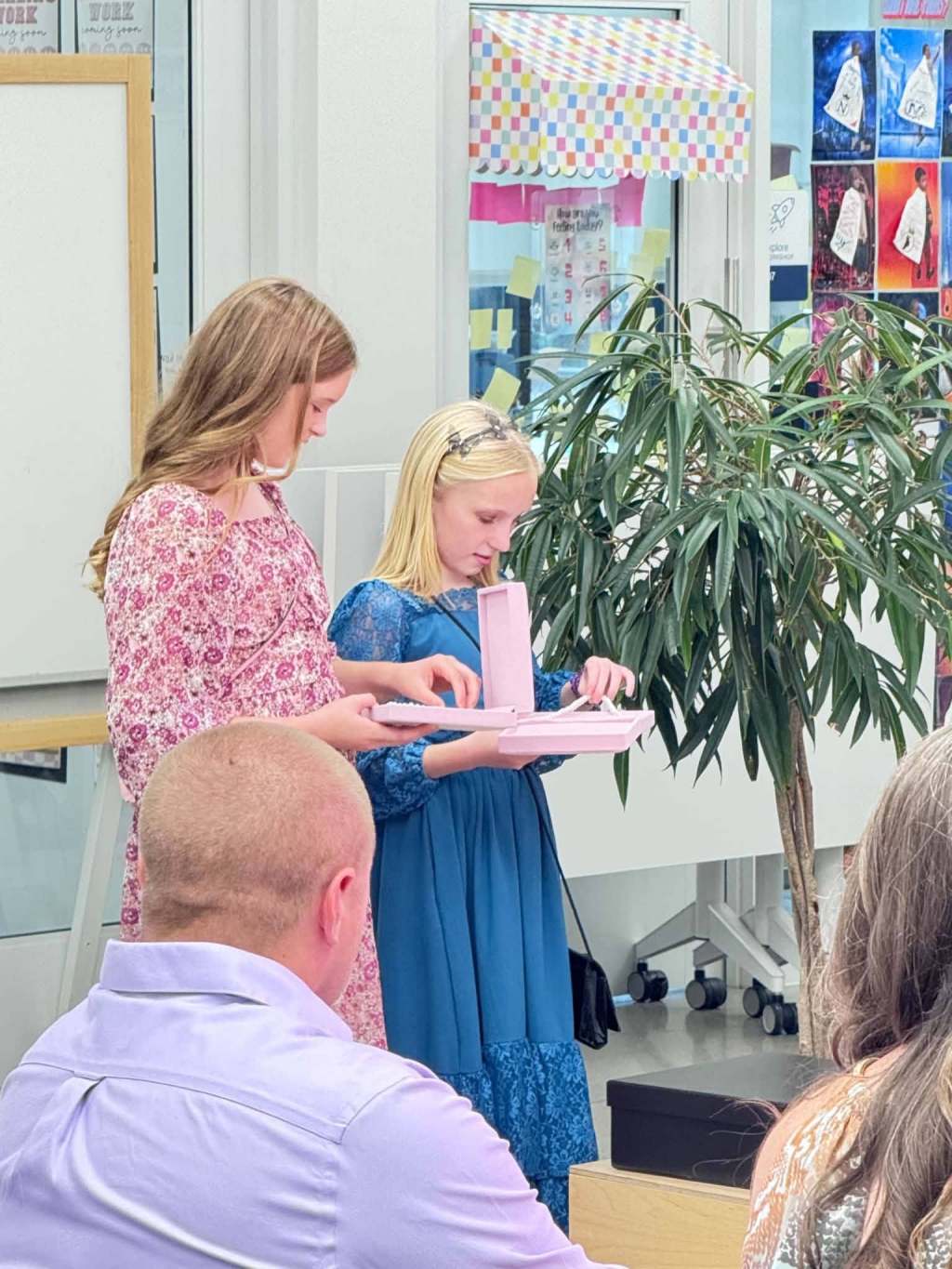
As part of the celebration, I gave Melody and Kaylee each a strand of pearls.
Juliette Gordon Low famously sold her pearls to help fund the Girl Scout movement because she believed so deeply in what girls could become when they were given opportunities to lead. More than a century later, Melody and Kaylee are so much more than Juliette could have imagined when she made that sacrifice.
They are young leaders carrying her tradition forward now.
Melody began Food for Friends with years of Girl Scout experience already shaping how she understood service, leadership, and community. Kaylee was not a Girl Scout when the project began, but she is now. By the time we closed this chapter, both girls had become part of the tradition Juliette Gordon Low started.
I gave them the pearls because they represent more than the completion of one project. They connect Melody and Kaylee to generations of girls who have learned to notice needs, serve their communities, lead alongside others, and believe they are capable of creating change.
Juliette’s pearls helped create opportunities for girls she would never meet. Melody and Kaylee are two of those girls, but they are also more than she could have imagined. They are published creators, community organizers, service leaders, and friends who turned an idea into meaningful action.
The pearls connect them to the women and girls who came before them, but they also represent everything still ahead. Melody and Kaylee are not simply following an old tradition. They are expanding it, strengthening it, and carrying it forward in their own way.
Food for Friends was not perfect, and that was never the goal. The girls had to revise plans, accept help, work through frustration, and make decisions without always knowing exactly how things would turn out. That is what made it an authentic leadership experience. They were not completing a simulation with a predetermined answer. They were doing real work in a real community, and every challenge became part of what they learned.
As their mentor, I had to learn when to teach, when to ask questions, when to help, and when to step back. It would often have been faster for an adult to make the decision or complete the task, but faster was not the point. The point was to give Melody and Kaylee the opportunity to practice leadership while they had caring adults beside them to provide support.
Now, the documentary has premiered, the party has been held, and the pearls have been given. Food for Friends is complete.
The book, documentary, lesson plans, and discussion guides will allow others to continue learning from the project. First Time Fears will continue supporting conversations about fear and food insecurity, and its proceeds will continue benefiting The Lord’s Diner and the Kansas Food Bank. Those are meaningful parts of the project’s legacy, but they do not mean Melody and Kaylee must keep carrying Food for Friends forever.
There is value in allowing a project to end. Food for Friends accomplished what it was created to do. It brought people together, shared food and resources, challenged stigma, and gave two children the opportunity to serve their community in a meaningful way.
Most importantly, it proved something I have believed from the beginning: children do not have to wait until adulthood to become leaders. With information, trust, responsibility, and support, they can lead now.
I am incredibly proud of Melody and Kaylee, and I am grateful to every person who helped make this experience possible. Food for Friends may be over, but the confidence, compassion, and leadership the girls developed will go with them into whatever they choose to do next.
For now, though, we are closing this door and celebrating everything that happened because two children cared enough to ask, “How can we help?”

